Optical Illusion : Optical illusions continue to captivate millions, turning simple images into viral sensations that test the limits of human perception.
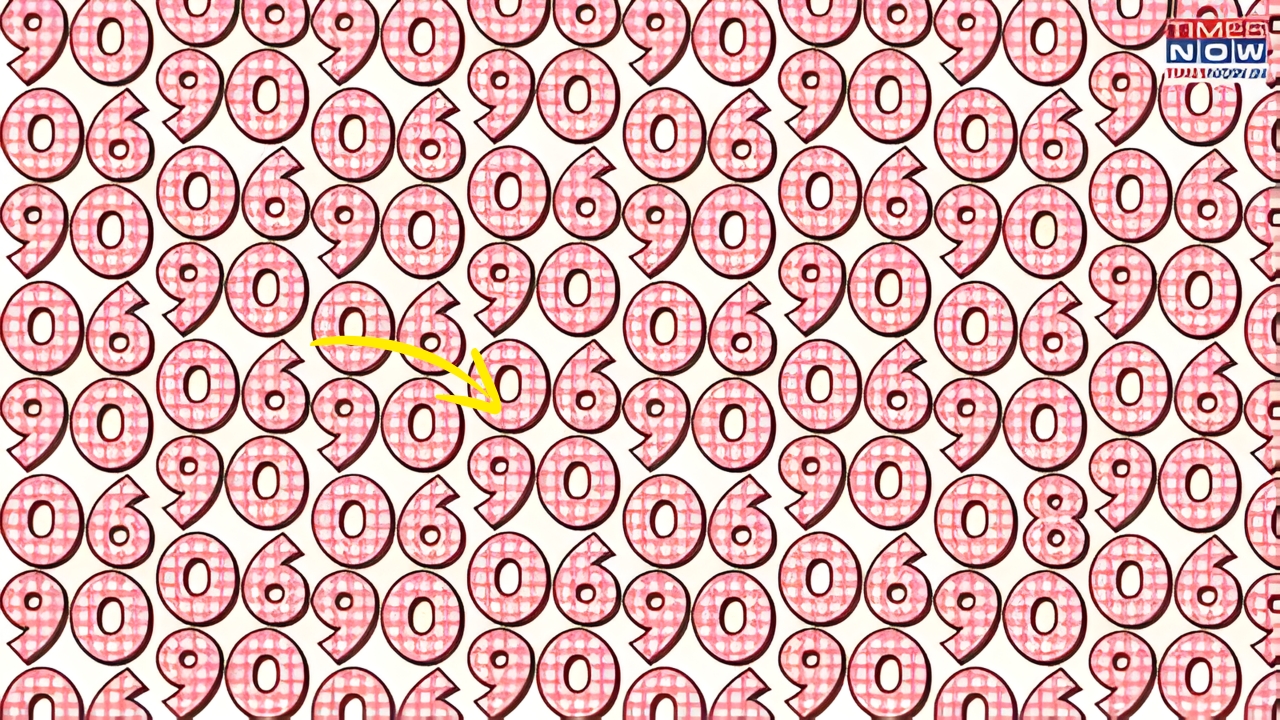
The latest craze sweeping social media involves a deceptively tricky puzzle where a lone number 8 lurks among a sea of similar digits, challenging viewers to find it before their brain plays tricks.
The Illusion That’s Breaking the Internet
Picture this: a dense grid or chaotic pattern filled with repeating numbers like 80s, 9s, or even stylized digits resembling orange slices and jungle motifs.
At first glance, everything blends seamlessly, fooling your eyes into seeing uniformity where subtle differences hide in plain sight.
This particular challenge, often dubbed the “Spot the 8” puzzle, has racked up millions of views on platforms like Instagram, TikTok, and Facebook, with users sharing frantic attempts and victory screams.
What makes it so addictive? The image exploits how our brains prioritize patterns, glossing over anomalies to process information faster.
Designers craft these visuals with meticulous care—flipping digits, tweaking fonts, or nesting the 8 in a way that mimics its surroundings.
One popular version features a black backdrop dotted with white 9s, where the 8 squats innocently in the bottom-left corner, its curves blending into the crowd.
Why Your Brain Betrays You
Our visual system evolved for survival, not puzzles. When bombarded with repetition, neurons fire in familiar rhythms, creating “inattentional blindness”—you literally don’t see the odd one out.
Neuroscientists explain it through Gestalt principles: the brain groups similar shapes, ignoring outliers unless forced to focus. In this illusion, the 8 might be rotated, mirrored, or camouflaged by color gradients, ramping up the difficulty.
Stress hormones kick in during timed challenges, narrowing your field of vision and amplifying the trick.
Studies from vision labs show only about 10-20% spot it under 10 seconds on first try, linking success to high IQ or trained observation skills—like pilots or surgeons honed by detail-oriented tasks. Kids often nail it faster, their unjaded minds less prone to assumptions.
Tips from Puzzle Masters to Crack It
Don’t just stare—scan systematically. Start from the top-left, moving row by row like reading a book, pausing on each cluster. Look for breaks in symmetry: a straighter line, flipped loop, or shadow mismatch. Zooming out helps spot density shifts, while squinting reduces fine details that distract.
Pro tip: Flip the script mentally. If it’s 80s hiding a reversed 08, hunt the backward slant in column seven, row eight.
For number-sea variants amid 9s, target edges where isolation thrives. Practice on easier grids builds “change detection” muscle, turning frustration into triumph over time.
Viral Reactions and Real Stories
Social media exploded with reactions. “Took me 45 seconds—am I doomed?” one Reddit user lamented, sparking 2,000 comments of solidarity.
A TikToker from India went viral slow-mo revealing the 8, garnering 5 million likes and debates on whether it’s “genius-only.” Parents turned it into family game night, with grandparents chuckling at tech-savvy kids’ quick wins.
Even celebs chimed in: a Bollywood star tweeted her epic fail, boosting shares.
Forums buzz with theories—some swear by peripheral vision, others by phone filters enhancing contrast. Accessibility angles emerged too, with audio-described versions for visually impaired fans, proving illusions transcend sight.
Science Behind the Magic
Psychologists at top unis like Harvard dissect these for cognitive insights. fMRI scans reveal the visual cortex lighting up chaotically, while prefrontal areas wrestle predictions versus reality.
Benefits abound: sharpened focus, delayed dementia onset, even mood boosts from dopamine hits on solving. Therapists prescribe them for anxiety, as the “aha!” moment resets overthinking loops.
Critics note cultural biases—Western eyes scan left-to-right, missing right-heavy hides. Global variants adapt: Arabic grids flow right-to-left. App developers cashed in, launching AR versions overlaying illusions on live cams for immersive hunts.
Where to Find and Share Your Own Optical Illusion
Hunt originals on sites like Hindustan Times or Times of India archives, where fresh batches drop weekly.
Free apps like “Illusion Quest” randomize grids, tracking scores against global leaderboards. Share your time on X with #SpotThe8—communities dissect variants, from jungle 0-3-5 mixes hiding an 8 to minimalist black-white duels.
Communities thrive on Discord, swapping custom edits. Teachers weave them into STEM lessons, proving fun trumps rote memorization every time.
Also Read this – Australia Centrelink Payment is Hold for these Citizens – Check your Eligibility
Optical illusions like Spot the 8 remind us vision is an active guess, not passive recording—pushing boundaries keeps minds agile in a distracted world. Dive in, train those eyes, and join the elite who see beyond the obvious; the next viral hit awaits your mastery.