Federal Deposit : Talk of $2,000 federal deposit checks has families across the USA glued to their phones, scanning bank apps for any sign of incoming relief from President Donald Trump’s tariff-fueled promises.
With his second term underway, whispers of these direct deposits blend hope with skepticism, echoing the swift COVID-era payouts that once filled accounts overnight.
Yet as January 2026 unfolds, the reality hinges on congressional green lights and courtroom battles, leaving everyday workers wondering if tariff billions will truly trickle down.
Trump’s Tariff-Funded Dream Takes Shape
President Trump lit the fuse on this idea last fall, touting tariffs on imports from China and Mexico as a cash cow generating “trillions” for the U.S. Treasury.
In a Truth Social blast, he pledged at least $2,000 per person for middle- and lower-income households, framing it as a dividend to honor American resurgence while chipping at the national debt.
During his White House Christmas remarks, Trump called 2026 the “largest tax refund season ever,” painting factories humming and wallets fattening from trade wins.
White House economic guru Kevin Hassett backed the play in December, signaling a formal pitch to Congress early in the new year.
The vision skips high earners—though Trump left that line blurry—and leans on IRS direct deposit rails proven during pandemic stimulus rounds. Proponents see it as payback for job-saving tariffs, a bold stroke in Trump’s economic playbook.
Where Things Stand Today
Mid-January brings no deposits, just mounting questions. A White House insider told TIME the team remains “committed,” exploring tariff windfalls but needing lawmakers to unlock the funds.
Trump chatted with New York Times reporters on January 7, floating end-of-year payouts if revenues hold, yet dodged details on congressional buy-in, insisting other sources could cover it.
Treasury projections peg 2025 tariff hauls at $200 billion, with $300 billion eyed for 2026—far shy of the $600 billion Trump claims or the $600 billion single-round checks might demand for qualifying adults and kids. Press secretary Karoline Leavitt noted in November no firm timeline exists, but the boss wants action.
Legal and Fiscal Roadblocks Loom Large
Supreme Court rulings cast long shadows. Trump invoked emergency powers for tariffs sans Congress, sparking importer lawsuits that could force refunds and dry up the pot.
He warned on Truth Social January 12 that a loss means America gets “screwed,” refunding hundreds of billions plus investment payback. Experts like Yale’s Budget Lab crunch numbers showing shortfalls for broad distribution, even at Trump’s rosy estimates.
GOP deficit hawks balk, prioritizing debt cuts or defense over handouts. Senator Josh Hawley’s rebate bill fizzled in committee last year, a sign of uphill sledding.
Democrats blast tariffs as a $1,200 yearly household tax, flipping the relief narrative. If approved, IRS portals would handle eligibility—likely under $75,000 singles, $150,000 couples, phasing higher—mirroring past relief.
Lessons from Stimulus Past
Americans remember 2020-2021 vividly: four rounds totaling $814 billion zipped via direct deposit in days, no paper needed. Trump’s modernization axed checks entirely, paving smoother paths for any greenlit deposits.
Recent Coast Guard “warrior dividends” of $1,776 pre-tax showed targeted feds can move fast, funded by separate pots in his “One Big Beautiful Bill.”
Social Security’s fresh 2.8% COLA adds $50-60 monthly for millions, but that’s no flat $2,000—confusion swirls online blending the two. Tax refunds swell too from unadjusted withholdings, rivaling stimulus for some come late January filings.
Economic Stakes and Public Pulse
Inflation ghosts haunt critics; Stanford’s Ryan Cummings flags 2021-style price spikes from sudden cash floods. Small firms brace for tariff-driven hikes on goods, potentially erasing gains. Polls capture 60% optimism, with TikTok and cable fueling “Where’s my check?” trackers mimicking IRS tools.
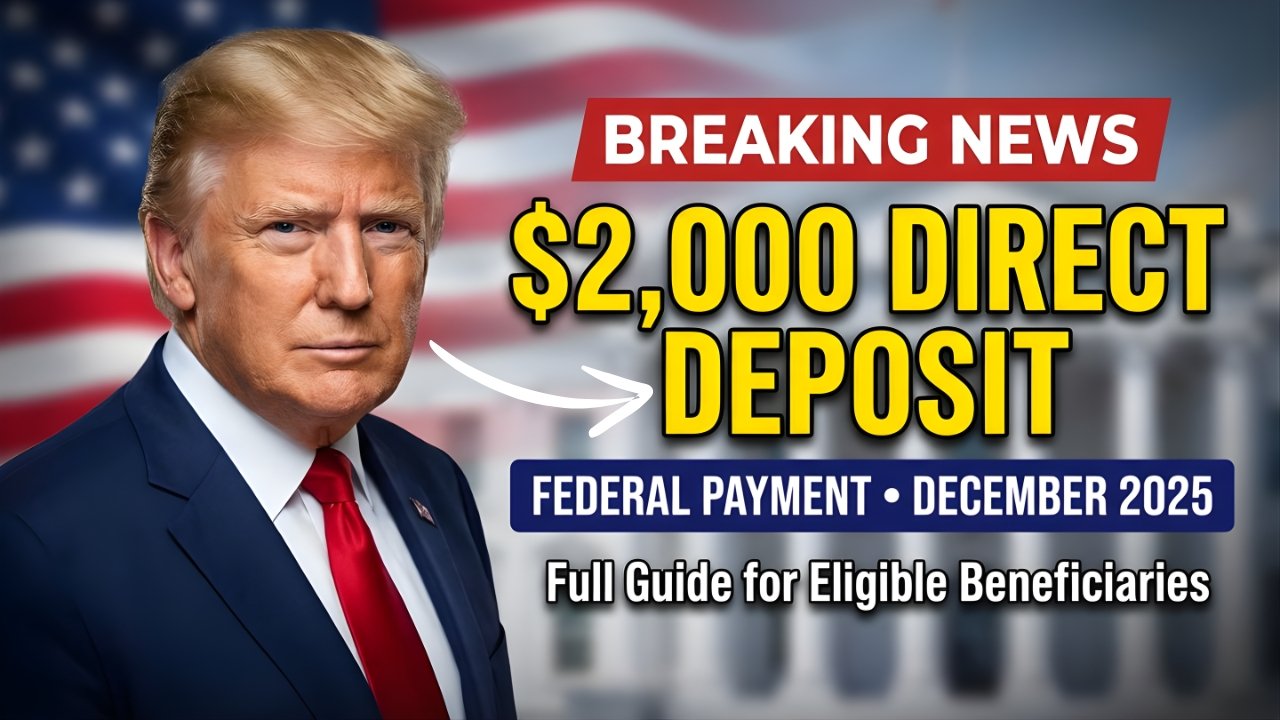
Trump pitches it as worker rebates shielding U.S. jobs, but delivery tests his deal-making chops amid midterms. Backtracking risks backlash, per analysts.
Steps Taxpayers Can Take Now
Update IRS direct deposit details pronto—e-file verifies banks swiftly. Eye irs.gov and treasury.gov for drops; scams explode, promising “fast-track” fees via wires or cards—report them cold.
File 2025 taxes January 26 onward for max refunds blending with any stimulus. Prep budgets conservatively; if checks land, treat as bonus for debt or savings.
Federal Deposit
$2,000 federal deposit checks embody Trump’s tariff gamble, dangling relief amid trade wars and fiscal tightropes. No transfers ping yet, but White House momentum and GOP majorities keep hopes flickering.
Also Read this – This 1990 Rare Pennies are equal to million and still in market
As courts rule and Congress grinds, Americans hold breath—policy sparks could soon ignite real bank alerts nationwide.