1976 Drummer Boy Quarter : The 1976 Bicentennial “Drummer Boy” quarter is one of the most recognizable modern U.S. coins, and in 2026 it sits at the crossroads of everyday change and serious collector value.
Most are still worth only 25 cents to a few dollars, but a small group of high‑grade, silver, or major error pieces has sold for thousands — and one headline‑grabbing example reportedly reached around $650,000 under exceptional circumstances.
How the Drummer Boy Quarter Was Born
In 1976, the U.S. Mint replaced the usual Washington‑eagle reverse with Jack L. Ahr’s patriotic design: a colonial drummer with a victory torch and a ring of stars, paired with a dual 1776–1976 date to mark America’s Bicentennial.
These quarters were struck for circulation at Philadelphia (no mintmark) and Denver (D), while San Francisco (S) produced special collector issues in both clad and 40% silver compositions.
Mintage was enormous — well over a billion pieces — which is why most worn Drummer Boy quarters still trade at face value.
The twist is that so many people pulled them from change as keepsakes that top‑grade survivors, especially in certified mint‑state or proof condition, are far scarcer than the raw mintage suggests.
Typical Values: Circulation vs. Collector Grades
For regular copper‑nickel circulation strikes, the value depends heavily on condition:
- Heavily circulated Philadelphia or Denver coins: usually 25 cents, maybe up to about 1 dollar as casual collectibles.
- Nice uncirculated examples (around MS‑63 to MS‑65): often 5 to 20 dollars, with sharper strikes and clean surfaces getting the higher end.
- Top‑pop pieces (MS‑67 or MS‑68, especially certified by major grading services): can bring hundreds to several thousand dollars, with one high‑grade clad quarter reaching into the low five‑figure range at auction.
San Francisco proof coins, with mirror fields and frosted devices, usually sell in the 10 to 30 dollar range for common grades, but ultra‑high‑grade or perfect PR‑70 deep cameo examples can command well over 100 dollars — and in the case of 40% silver proofs, into the hundreds or more when both grade and eye‑appeal align.
Silver Issues and High‑End Auction Records
The Mint issued special 40% silver Drummer Boy quarters in collector sets:
- 40% silver uncirculated S‑mint quarters typically trade from a few dollars up to several dozen dollars depending on grade.
- 40% silver proof S‑mint pieces usually run from around 10–30 dollars, with superb PR‑69 or PR‑70 deep cameo coins bringing strong premiums.
A handful of silver Bicentennial quarters in nearly flawless grades have achieved spectacular auction results — individual certified MS‑69 or PR‑70 coins have sold for several thousand dollars, and some reported sales in the 5,000–6,000 dollar range for top‑tier examples are widely cited in the hobby.
Errors, Varieties, and the “$650,000” Quarter
Where the real fireworks start is with major mint errors and rare die varieties:
- Dramatic off‑center strikes (often 50% or more, with a full date still visible) can bring a few hundred dollars, and more when combined with other oddities.
- Severe die cap errors, wrong‑planchet strikes, and spectacular multi‑strike pieces can sell for many thousands to specialized collectors.
- Genuine doubled‑die obverse (DDO) varieties — especially noted on some 1976‑D issues — have sold from the high hundreds into the low thousands in certified mint‑state, with one MS‑66 DDO Drummer Boy quarter bringing about 8,400 dollars at auction.
The widely shared story of a single “Drummer Boy” quarter selling for around 650,000 dollars involves an extreme outlier: a coin combining ultra‑high grade, an exceptional variety or error, and intense bidding in a strong market.
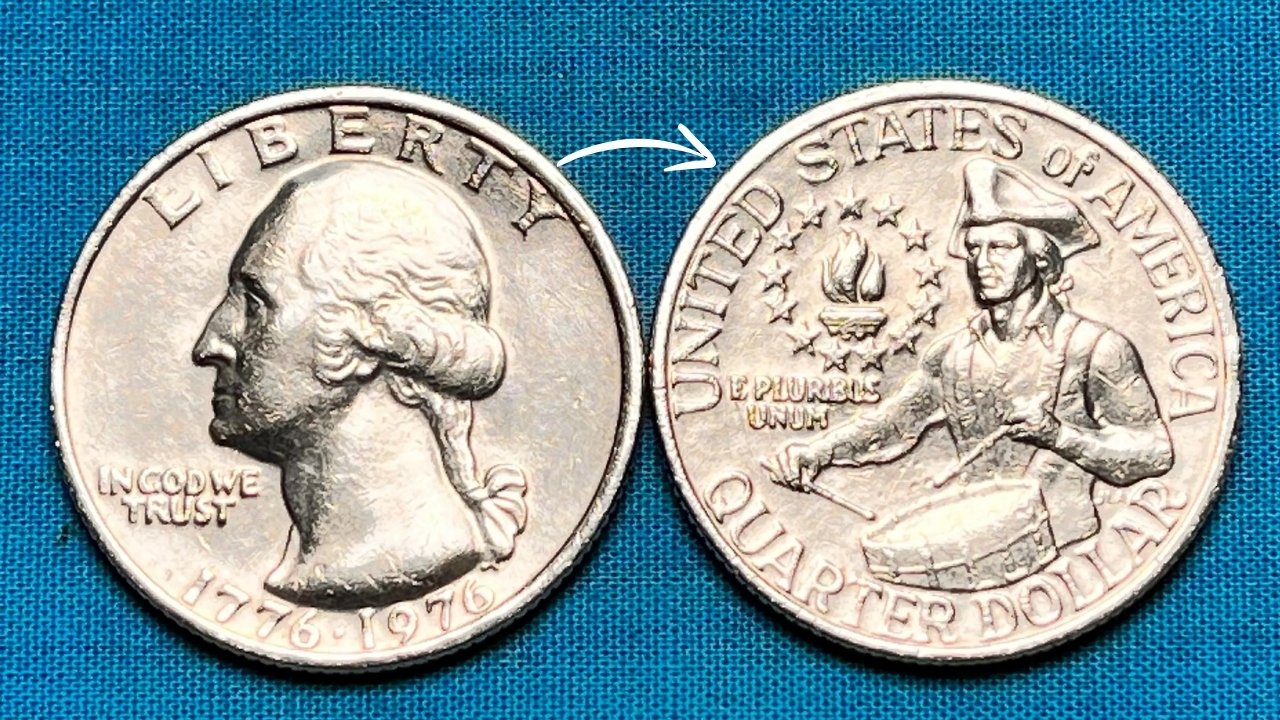
Reports stress that this price reflects a perfect storm of rarity, condition, and collector demand — not any typical Bicentennial quarter plucked from pocket change. For most owners, that headline should be read as an inspiring exception, not an expectation.
How to Check If Your Coin Is Special
If you have a 1976 Drummer Boy quarter and are wondering whether it’s worth more than 25 cents, these quick checks help:
Look at the edge:
- Solid silvery color: likely 40% silver, worth more than face value.
- Visible copper core (“sandwich” look): standard clad, value driven by grade and errors.
Check the mintmark:
- No mintmark: Philadelphia circulation or clad proof.
- D: Denver circulation, including known doubled‑die varieties.
- S: San Francisco proof or 40% silver issue from a special set.
Inspect condition and oddities:
- Sharp details, minimal contact marks, and strong luster suggest higher mint‑state grades.
- Obvious doubling on lettering or date, heavy off‑center strikes, or dramatic cracks/caps may indicate valuable errors.
For anything that looks unusually sharp or strange, serious collectors usually submit the coin to a major grading service to confirm authenticity, variety, and grade before selling. The cost only makes sense if you believe the potential value is significantly above the grading fee.
1976 Drummer Boy Quarter
Ultimately, the 1976 Drummer Boy quarter is a perfect example of modern U.S. coinage where history, art, and market fascination collide.
Also Read this – $2,000 IRS Confirms of January Relief Payment – Check Eligibility, Date and Qualifications
Most pieces remain nostalgic 25‑cent souvenirs, but a select few — especially silver, proof, high‑grade, and dramatic error examples — can still turn a modest find into a big‑money story in 2026.