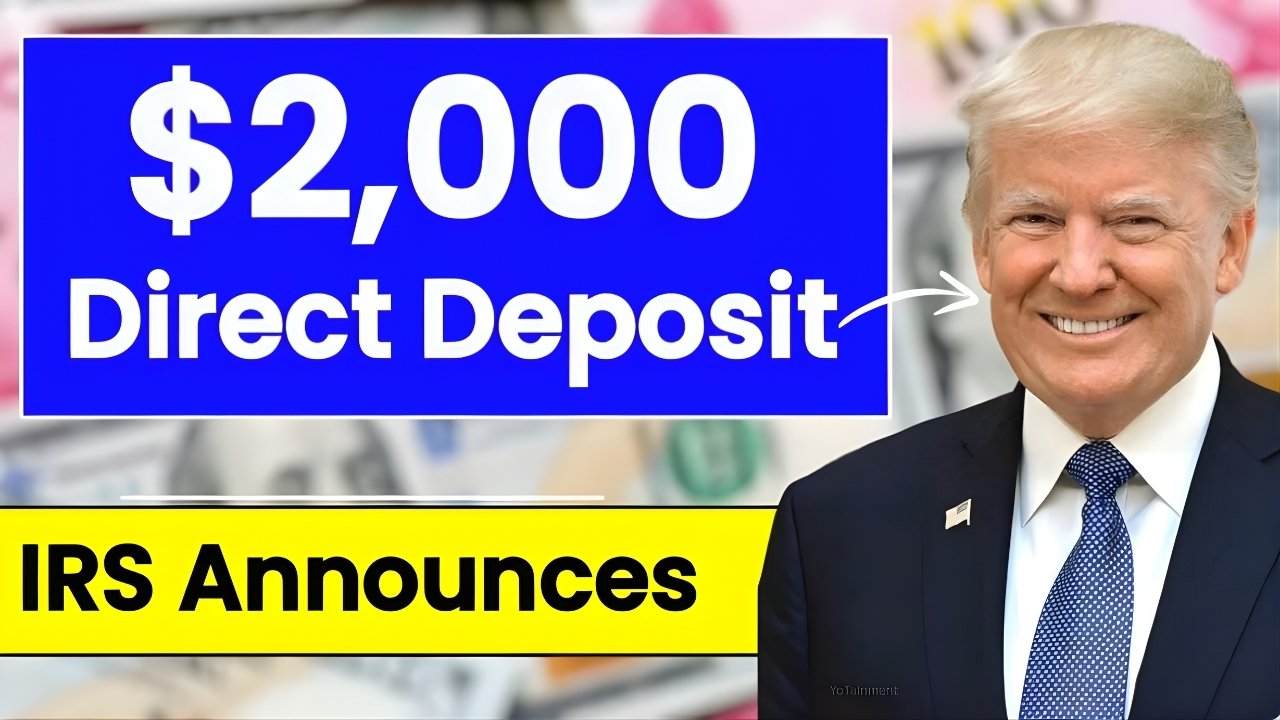
Direct Deposit : Rumors of a $2,000 direct deposit landing in Americans’ bank accounts this January have been swirling like wildfire across social media and news feeds.
President Donald Trump, fresh off his 2025 inauguration, teased the idea during late-year cabinet talks, calling it a “tariff dividend” to reward citizens for his aggressive trade policies. But as the first full month of 2026 unfolds, the reality is far murkier than the viral posts suggest.
Tariff Talk Sparks Hope
President Trump’s pitch started gaining steam back in December 2025. He claimed tariffs on imports from China and other nations were raking in “trillions,” enough to fund hefty refunds for everyday folks.
Picture this: factories humming back home, jobs pouring in, and taxpayers getting a slice of the action via direct deposit. Supporters latched on, sharing memes of overflowing bank apps and holiday windfalls.
The concept ties into Trump’s long-standing love for tariffs as an economic weapon. During his first term, similar duties hit steel and aluminum, aiming to shield U.S. workers.
Now, with reelection behind him, he’s doubling down, promising these levies will supercharge manufacturing without sticking it to consumers.
Online chatter exploded, with hashtags like #TariffDividend2026 trending by New Year’s Eve. Yet, economists warn these taxes often boomerang, hiking prices on everything from electronics to groceries.
No Official IRS Green Light
Despite the hype, the IRS has stayed mum on any $2,000 checks slated for January. The agency’s last big payouts wrapped up years ago with COVID-era stimulus rounds, the final ones hitting accounts in 2021.
A 2024 catch-up for unclaimed Recovery Rebate Credits sent out up to $1,400 per person into early 2025, but that window slammed shut last April. No new legislation has passed Congress to authorize fresh federal stimulus.
Fact-checkers pounced early, labeling most circulating claims as misinformation. Sites promising “IRS-confirmed $2,000 deposits” often link to shady forms asking for Social Security numbers or bank details—classic scam bait.
The IRS never reaches out via email or text for such programs, and legitimate updates always come through official letters or their website. As of mid-January 2026, no announcements grace irs.gov about tariff-funded payouts.
Military Gets the Real Checks
One group isn’t waiting on rumors: U.S. military personnel. Active-duty troops and reservists started seeing $2,000 housing supplements direct-deposited this month, courtesy of Trump’s “One Big Beautiful Bill.”
About 1.28 million service members qualify, with payments classified as nontaxable boosts to their allowances. The Pentagon tapped a $2.9 billion pot for this, separate from tariff revenue.
Coast Guard members scored a similar win—a $2,000 “Devotion to Duty” bonus, netting around $1,776 after taxes. These rollouts stem from a government funding measure signed in November 2025, keeping operations smooth through January.
It’s a tangible perk amid broader economic debates, but civilians hoping for the same are out of luck so far. This slice of good news for troops has only fueled confusion, as headlines blur the lines between military aid and public stimulus.
Why the Confusion Persists
Social media amplifies everything, and 2026 is no exception. Posts from influencers and anonymous accounts recycle old stimulus graphics, slapping on “January 2026” dates for clicks.
Some point to state programs like Alaska’s Permanent Fund Dividend, which dishes out annual oil-funded checks around $1,700, but that’s not federal or tied to tariffs. Others mash up Trump’s quotes with unrelated tax refund tweaks.
Democrats cry foul, citing Joint Economic Committee math showing tariffs have cost average households nearly $1,200 since Trump’s return.
They argue these “dividends” are smoke and mirrors, masking higher living expenses. Trump counters that short-term pain yields long-term gain, with tariff cash projected at over $600 billion already. The debate rages in op-eds and cable news, keeping the $2,000 dream alive for the hopeful.
Scams Lurk in the Shadows
Beware the dark side of this frenzy. Phishing emails mimicking the IRS promise quick $2,000 deposits if you “verify” your info. Fake websites dangle eligibility quizzes leading to data theft.
The Federal Trade Commission reported a spike in such schemes post-election, urging folks to double-check sources. Real government aid never demands upfront fees or unsolicited contact.
Financial advisors recommend steering clear of unverified links. Instead, monitor your IRS online account or mail for legit updates.
If a deal sounds too good—like instant millionaire status from tariffs—it’s probably a trap. Staying vigilant keeps your finances safe while Washington sorts the policy puzzle.
Political Push Meets Reality Direct Deposit
Trump’s team hints at more to come, floating 2026 as “the largest tax refund season ever.” Cabinet meetings buzzed with optimism, but turning talk into deposits needs congressional buy-in and IRS machinery.
With midterms looming, both parties wield the idea as a wedge—Republicans tout prosperity, Democrats decry giveaways to the rich disguised as populism.
For now, most Americans won’t see that $2,000 ping their phones. Military families celebrate well-deserved bumps, but the broader public grapples with elevated costs from trade wars. As January marches on, eyes stay glued to White House briefings for any shift.
Also Read this – 5 Rare Wheat Penny Coins worth is announce, Still in Circulation
In the end, this tariff dividend saga captures the high-stakes gamble of Trump’s economic playbook. Promises dazzle, but delivery hinges on dollars, deals, and debates yet to unfold.
Keep skepticism sharp and sources legit—true relief, if it arrives, will announce itself without the fanfare of forwards or fakes.